As the festive season rolls around it is a very exciting time of year, characterised by lots of fun and excitement, often involving social events. Unfortunately, the excitement of the festive season can often be overshadowed by concerns and fears around the food at these events. We will look into some practical tips for you to implement throughout the festive season to enable you to spend more time celebrating and less time in pain!
You are not alone
Unfortunately, digestive pain and upset is characteristic of the Christmas season for many individuals, not just reserved for those who experience this pain year round. However, as you’d assume, those with IBS are more likely to experience these symptoms at a greater severity, compared to individuals who do not struggle with IBS.

Why during this Festive time?
We hear you! Why is this interrupting all the fun during the festive season? As a matter of fact, there are a number of factors which contribute to the increased number of people who experience gut issues over the festive season. Often, many of these factors combine at once, causing a strain on our digestive system and consequently resulting in symptoms which may include bloating, wind, heartburn, abdominal pain and irregular bowel movements, in other cases, it may only take one of these factors to lead to an upset gut.
What triggers these symptoms?
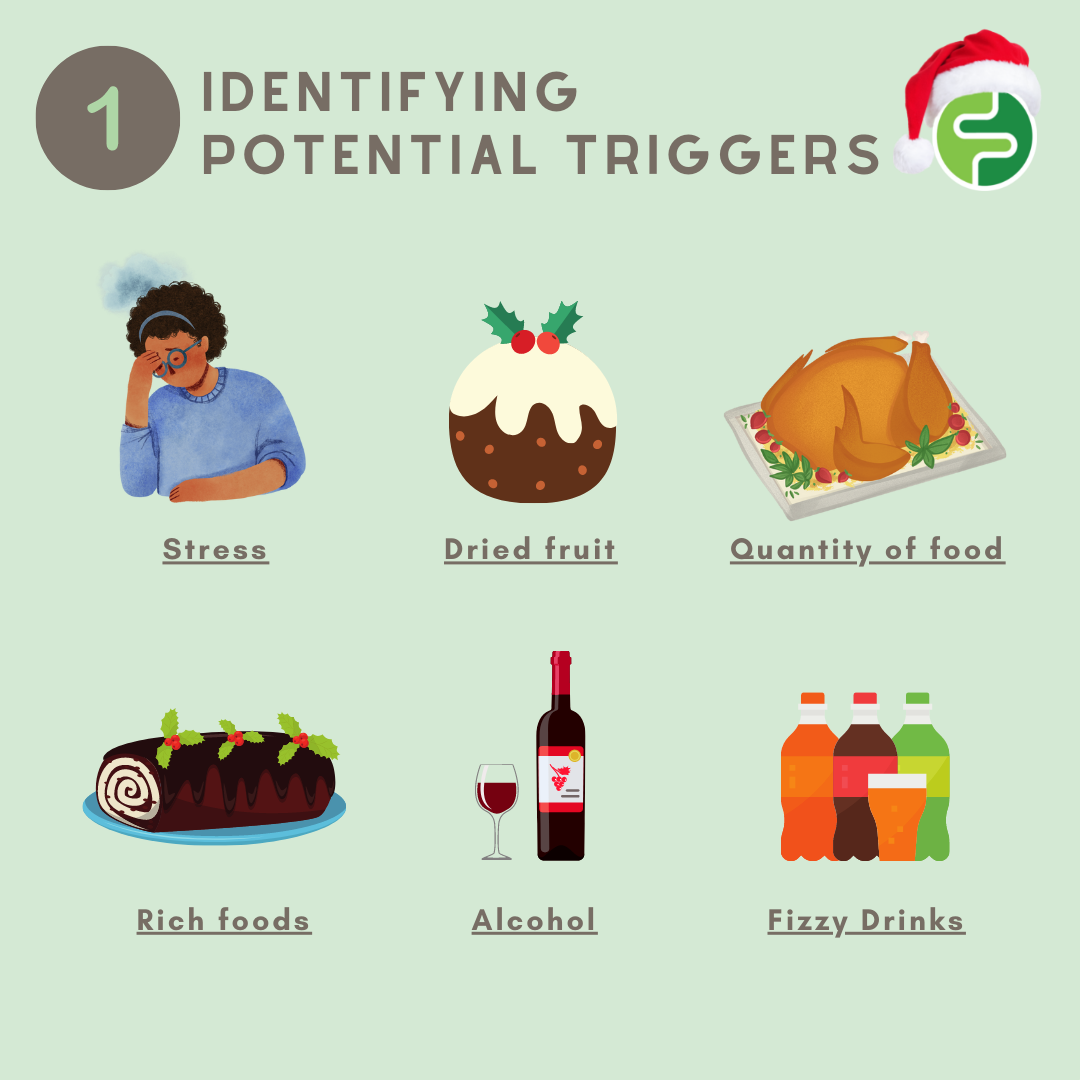
Rich Foods
The foods commonly associated with the festive season are often very rich – being quite sweet, fatty, oily or high in lots of nutrients. These include foods such as roast meat, roasted vegetables, Christmas pudding and lots of yummy desserts. These foods require a lot of work by our digestive system to be broken down and digested, consequently, the digestive system working hard may result in unwanted side effects and symptoms resulting in gastrointestinal upset.
To reduce the likelihood of rich foods causing gastrointestinal discomfort, you should focus on increasing the number of times you chew your food. Recommendations say that each mouthful should be chewed 32 times before being swallowed! While you may not need the full 32 mouthfuls, aim to increase the amount of chews you take to help your digestive system by doing some of the work for it! Also aim to drink water with your meal, which may help your digestive system digest the food.
The quantity of food
Often during the festive season, we find ourselves eating more than usual, whether we are eating larger portions or eating more different foods. The increase in the number of foods eaten obviously means that there is more food that the digestive system needs to work to digest! As a result, often this digestion slows down, may be more uncomfortable and take longer than usual. This slowed and more painful digestion can result in experiencing uncomfortable symptoms. Similar to the recommendations when eating rich foods –try to increase the number of times you chew each mouthful and drink water while eating your meal. Also remember that while you are enjoying yourself, you make sure you are aware of how much you are eating and aim to minimise the risk of lying on the couch while you’re celebrating because you’re so full or uncomfortable!!!
Stress
While the festive time is a time for celebration, it is also a time where many individuals experience heightened stress. Many studies have linked stress with gastrointestinal discomfort; and there is much research into the connection between the gut and the brain through the gut-brain axis. These studies have found that stress is a contributing factor to gastrointestinal discomfort and may result in gastrointestinal symptoms. While it is much easier said than done, it may be effective for you to look into ways to manage your stress, whether this is through practicing yoga or meditation or reducing the amount of responsibilities you have over this time.
Alcohol
Often the festive season involves an increase in alcohol consumption by many individuals, and alcohol may trigger gastrointestinal upset. Alcohol also affects the body’s ability to digest food – it may inhibit the ability of many of our organs to function effectively and may result in slowed digestion, which may lead to gastrointestinal symptoms. To help combat this, pace yourself while celebrating and be mindful of the amount of alcohol that you are consuming.
Fizzy Drinks
Over the festive season, individuals often have an increase in the amount of fizzy drinks that they consume. Drinking fizzy drinks bring more air into your digestive system, which may lead to symptoms of bloating, gas and/or burping. Again, be mindful of your consumption and make sure you aren’t overconsuming too often!
Dried Fruits
Many traditional Christmas foods, like Christmas pudding include dried fruits. Dried fruits are often high FODMAP, or only low FODMAP at certain serving sizes. Be conscious of the amount of dried fruits you are eating and make sure you stay within your tolerated allowanced for each dried fruit that you will be consuming!
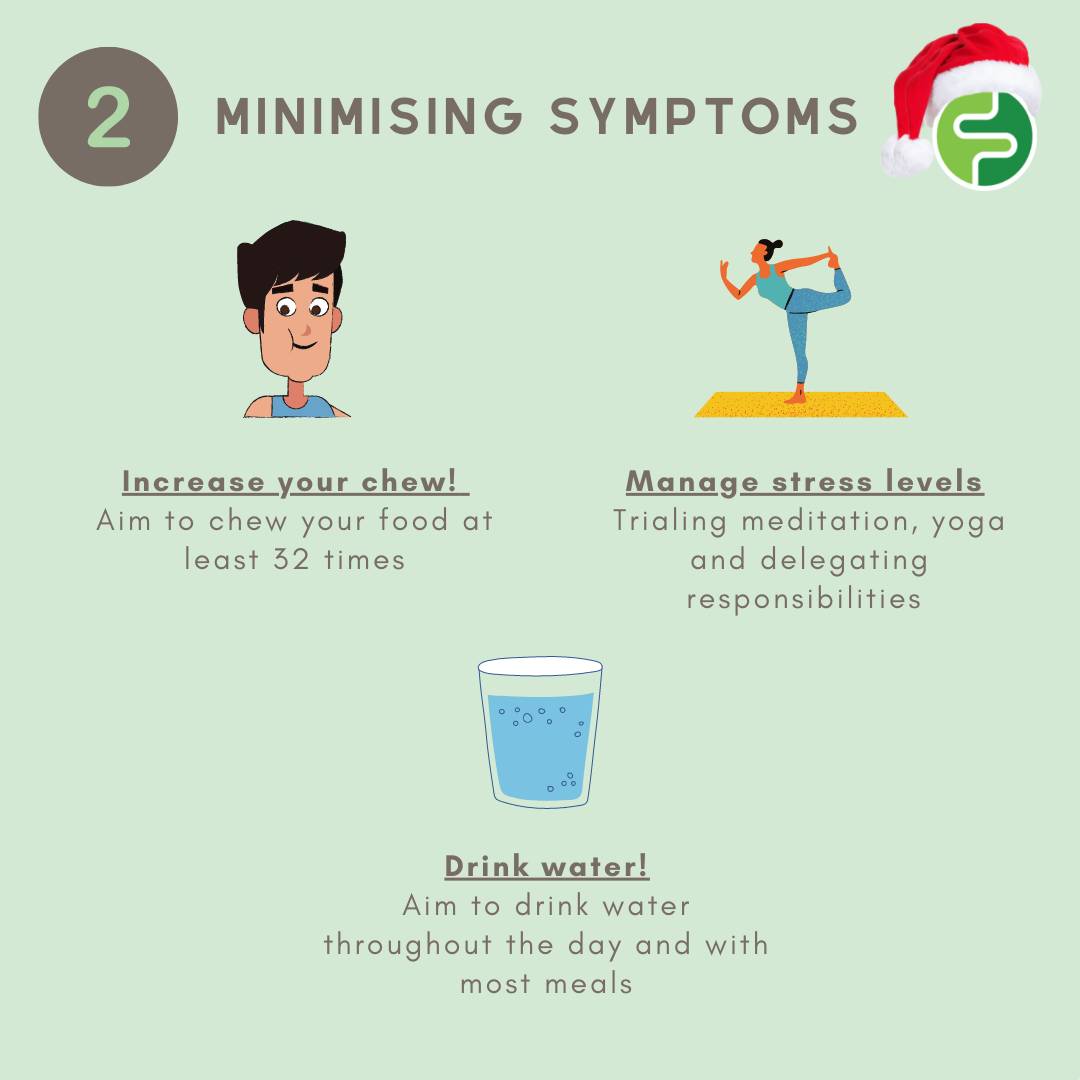
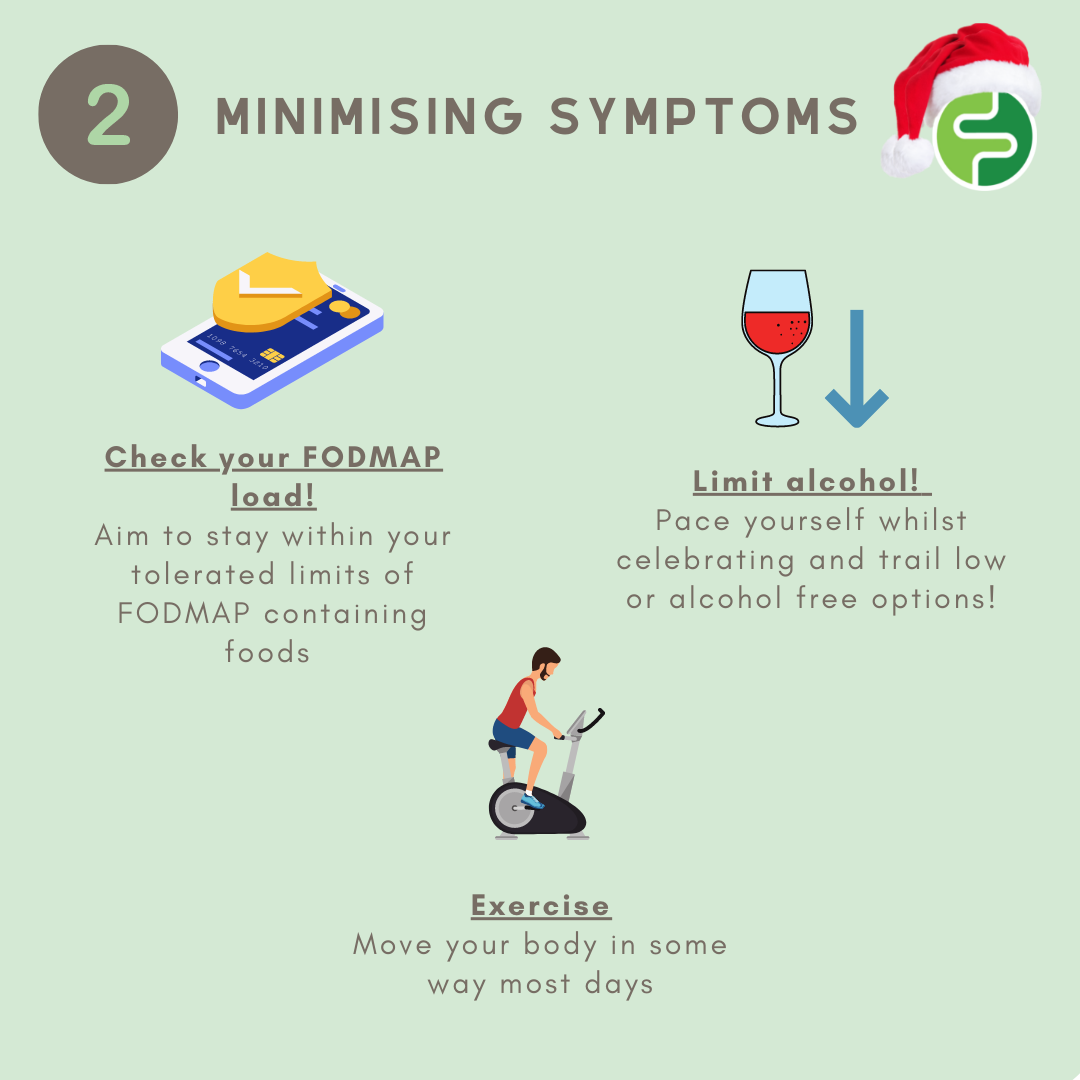
Tips to beat the bloat this Christmas season!
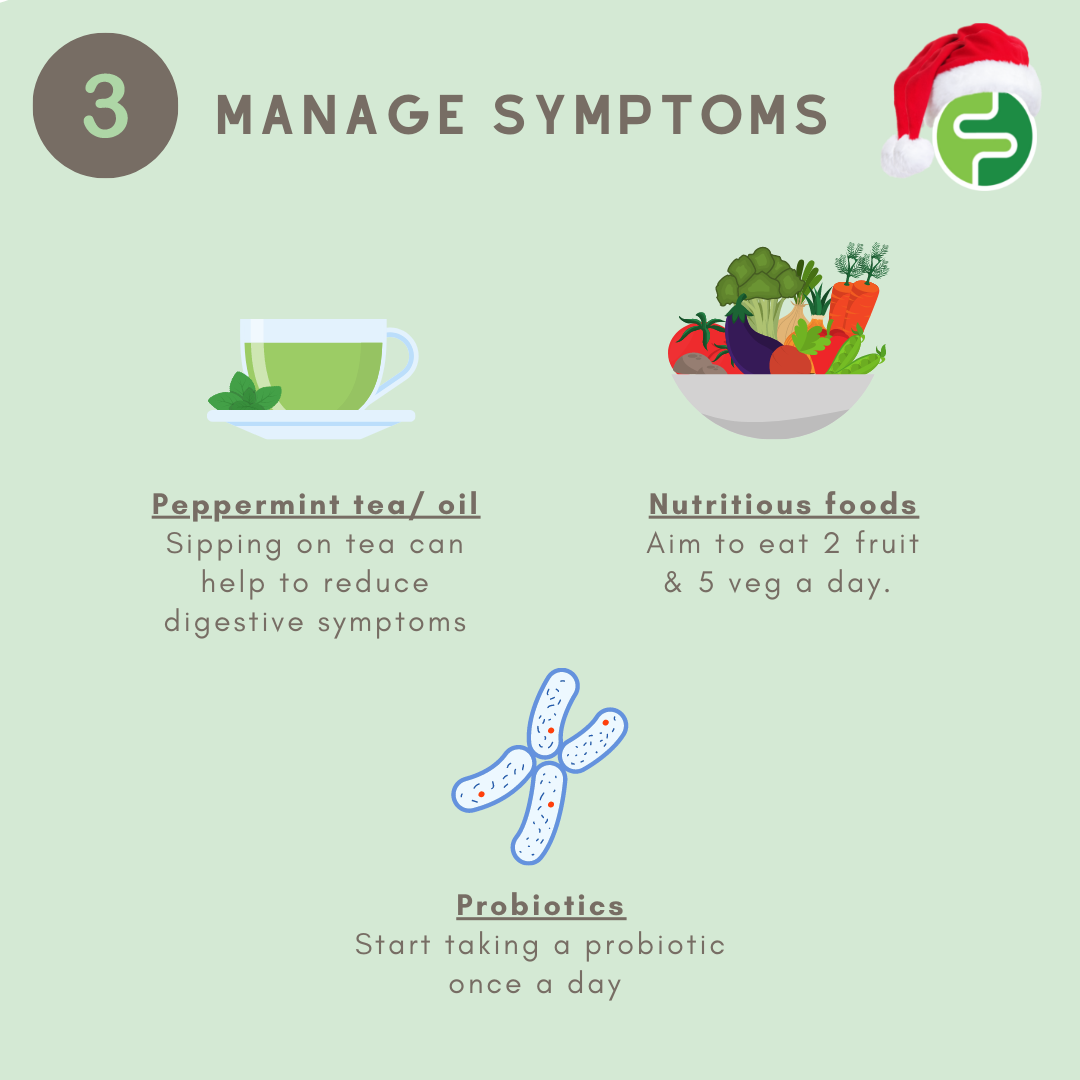
To help minimise the number of symptoms you experience this festive season remember to incorporate the tips mentioned above into your habits. Some other useful tips which may help you include focusing on the basics – making sure you are drinking plenty of water and eating foods which are nutritious and help you to achieve the recommended two serves of fruit and five serves of vegetables per day; to get out and do some exercise, moving your body in some way, whether it is an exercise form you love or a brisk walk; starting the day with a probiotic to help boost your gut bacteria if you want; sipping on peppermint tea or trying Mintec Peppermint IBS Relief, which can help to minimise/reduce the amount/severity of symptoms you experience!
To wrap up
Remember to be aware of your eating behaviours and how they affect your digestive health while celebrating the festive season. Try to incorporate some of the tips which have been discussed and find out what works for you! Remember that over the holidays, many Dietitians and doctors are still working, if you need don’t hesitate to reach out for support!
Written by Niamh Smith, Student Nutritionist