What is it?
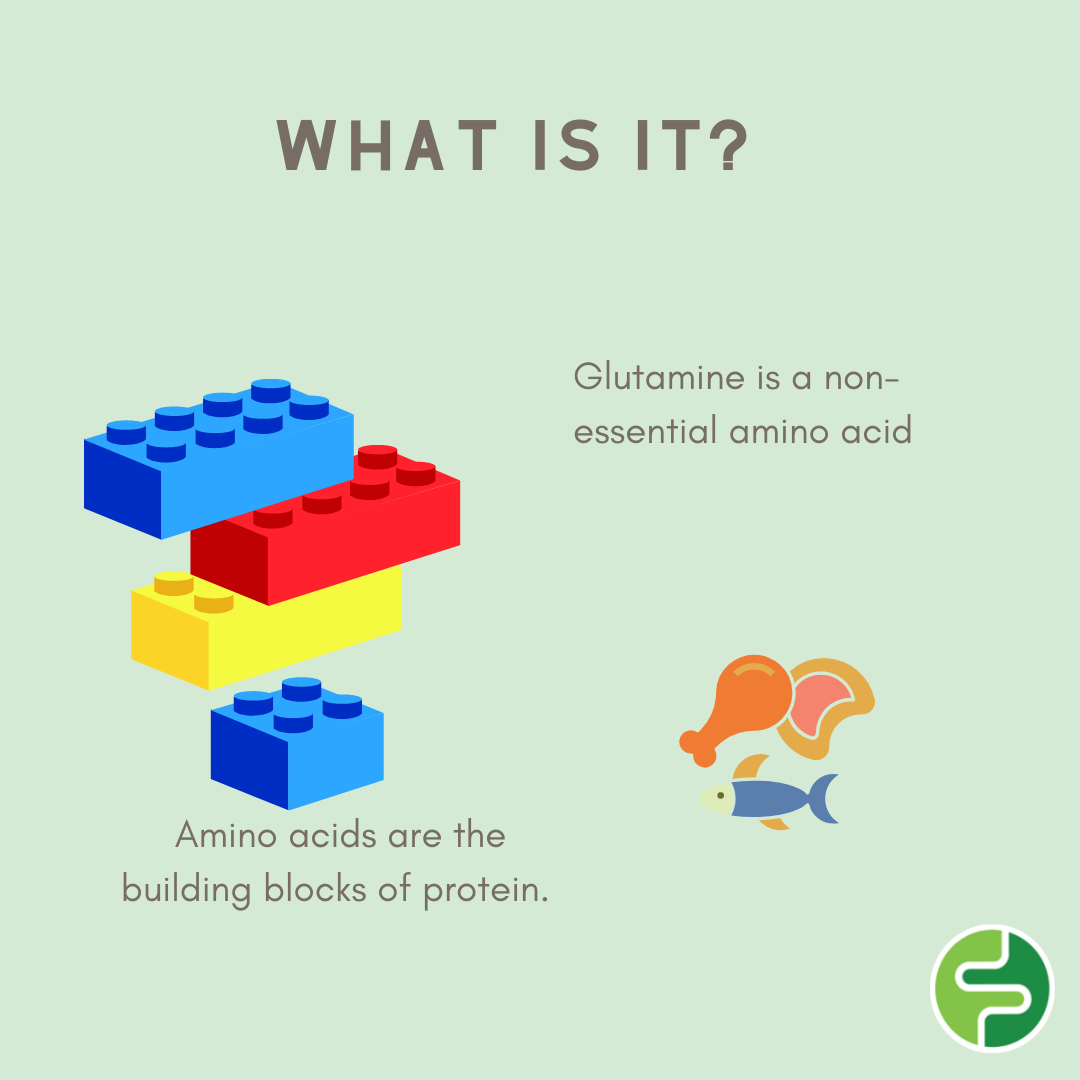
Glutamine is a non-essential amino acid found in foods and supplements.
Amino acids are the building blocks of protein. This means that they are molecules which combine to create proteins.
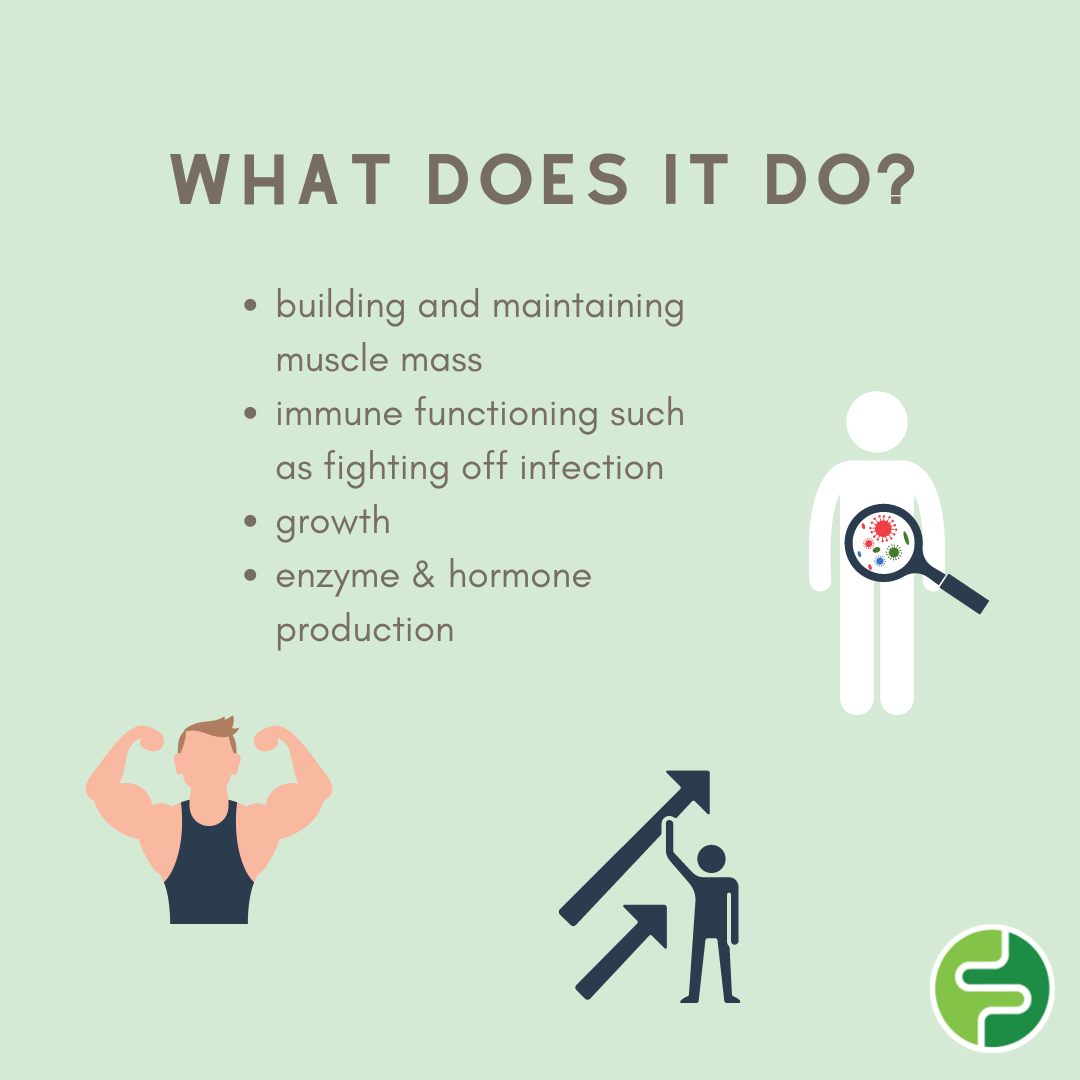
Protein is needed for many essential things such as building and maintaining muscle mass, immune functioning such as fighting off infection, growth and enzyme & hormone production.
There are 20 amino acids your body needs. Some are essential, others non-essential.
What’s the difference?
Both essential and non-essential amino acids are necessary for your body to function properly. However, the difference is that the 11 non-essential amino acids are created by your body whereas the remaining 9 essential ones need to be consumed from different foods
All foods with protein contain amino acids. However, animal-based protein sources such as meat and poultry contain all 9 essential amino acids. Plant based protein sources still contain amino acids however, not all 9 essential ones. This means that you should aim to include a wide variety of protein sources to ensure that you’re consuming all 9 essential amino acids.
Is it low FODMAP?
Glutamine is naturally created in the body. It’s made in the muscles and transferred into different organ systems via the blood.
However, it can also be consumed from low FODMAP foods that contain protein. All meats, poultry and eggs are low FODMAP; there are also many plant-based sources of protein which are low FODMAP such as firm tofu, lactose free or Greek yoghurt, and nuts & seeds.
What does L-glutamine do specifically?
Glutamine is the most common amino acid in the body.
It is used to make other amino acids as well as making glucose which is your body’s main source of energy.
There is some evidence that taking additional glutamine in supplement form may help gut function, immune function, and other systems of the body.
This is because the body uses more glutamine when in times of stress; this can mean when they body is fighting an infection such as an IBS flare up
Can L-glutamine help with IBS?
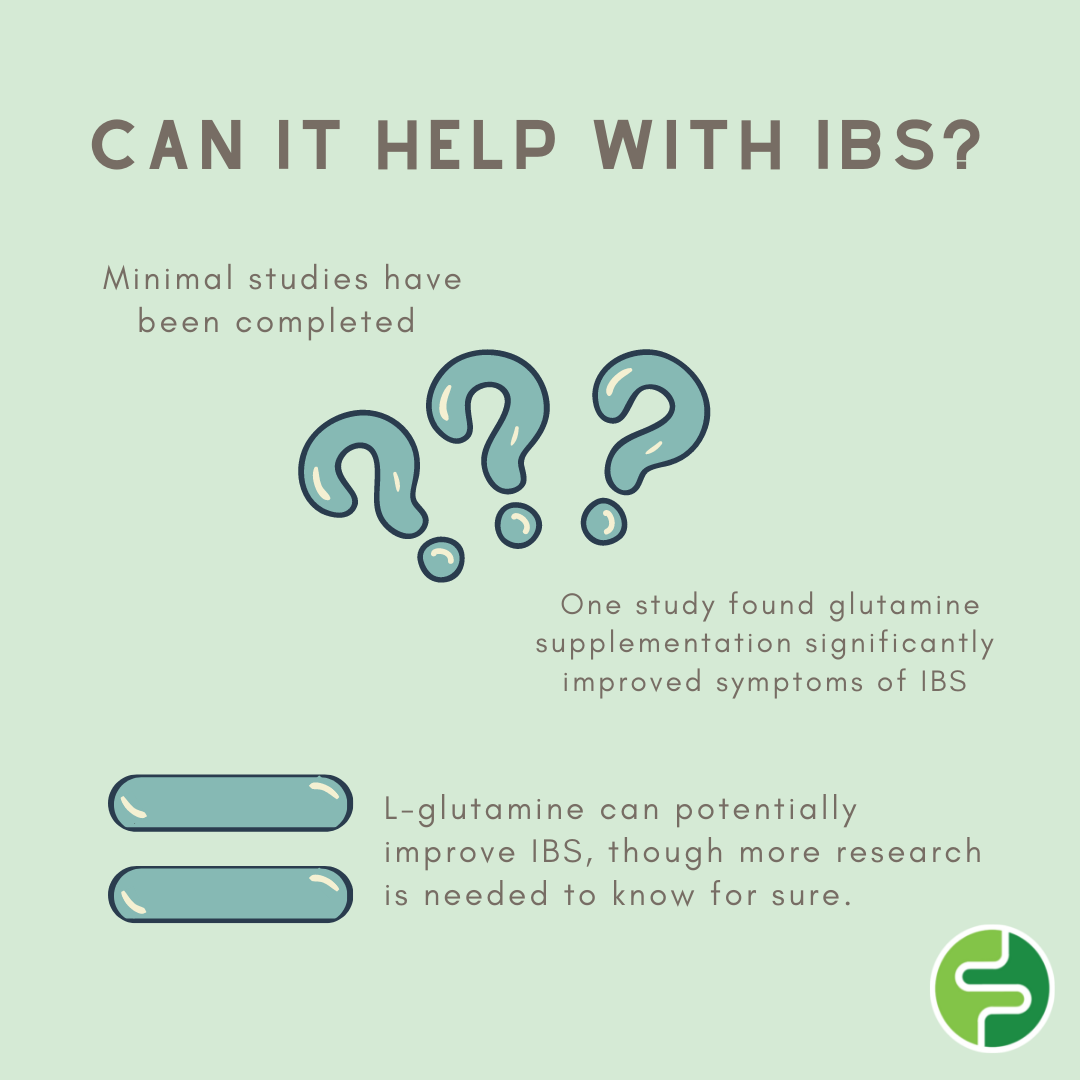
To date, minimal studies have been completed on the direct link to confirm that L-glutamine improves IBS.
There has been one study completed which found significant improvement in symptoms of IBS with the supplementation of Glutamine.
This suggests that L-glutamine can potentially improve IBS, though more research is needed to know for sure.
It is always best to talk to an Accredited Practising Dietitian about supplements of any kind if you are on a low FODMAP diet as some may not be beneficial or they may contain high FODMAP ingredients. IF you’re considering taking L-glutamine as a possibility for improving your IBS issues speak to your dietitian before you begin to take it.