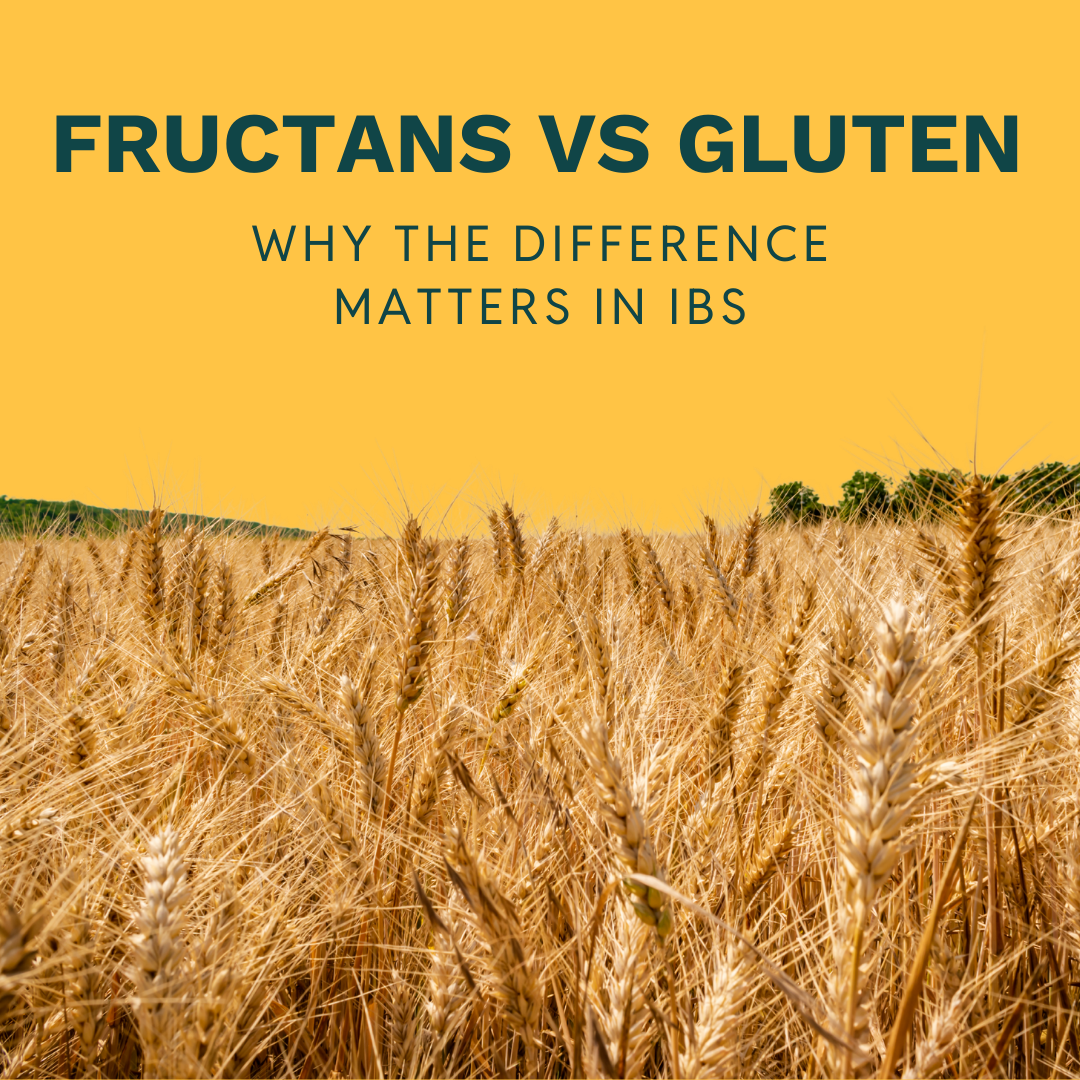
You may have heard from a family member or friend, or maybe you’ve even tried it yourself, removing gluten from your diet. Many people who experience bloating, abdominal pain, distention, or altered bowel habits after eating carbohydrate-rich foods report feeling better after eliminating gluten. But is gluten really the culprit?
Strictly speaking, gluten only needs to be removed if you have coeliac disease or non-coeliac gluten sensitivity. If neither applies, it’s likely that the symptoms are triggered by fructans, a type of carbohydrate found in many of the same foods as gluten. Consider if you’ve ever felt similar discomfort after eating foods like watermelon, garlic, or onions, these are all high in fructans.
In this blog, we explain what fructans are, how they differ from gluten, which foods are rich in both, and why understanding the difference matters for gut health.
What Is Gluten?
Gluten is a protein naturally found in wheat, barley and rye. It provides structure and elasticity to baked goods.
In people with coeliac disease, gluten triggers an autoimmune reaction that damages the lining of the small intestine. This condition requires strict, lifelong avoidance of gluten.
In people without coeliac disease, gluten does not cause intestinal damage. While some individuals report symptoms when consuming gluten, current research suggests that in many cases, the symptoms may instead be related to FODMAP carbohydrates present in the same foods.
What Are Fructans?
Fructans are a type of fermentable carbohydrate that belong to the FODMAP family (Fermentable Oligosaccharides, Disaccharides, Monosaccharides and Polyols).
Fructans are:
- Poorly absorbed in the small intestine
- Rapidly fermented by gut bacteria
- Osmotically active, drawing water into the bowel
This combination may contribute to bloating, abdominal pain, altered bowel habits and excessive gas in people with IBS.
Fructans are found in:
- Wheat-based products (bread, pasta, wraps)
- Rye
- Onions
- Garlic
- Certain fruits and vegetables
- Inulin and chicory root fibre added to processed foods
Importantly, fructans are carbohydrates. Gluten is a protein. They are entirely different compounds.
Why Do People Feel Better on a Gluten Free Diet?
Eliminating gluten usually involves cutting out many wheat-based foods. Because wheat contains both gluten and fructans, removing it also reduces fructan intake.
For people with IBS, this reduction in fructans is often what improves symptoms. Clinical trials have shown that many individuals who believe they are gluten-sensitive may actually be reacting to fructans rather than gluten itself.
Unnecessary long-term gluten avoidance can have downsides, including:
- Reduced dietary variety
- Increased food costs
- Lower fibre intake
- Potential impacts on gut microbiota diversity
IBS vs Coeliac Disease: Why Proper Testing Matters
Before removing gluten, it is essential to rule out coeliac disease through appropriate medical testing while still consuming gluten.
Removing gluten before testing can lead to false negative results.
If coeliac disease is excluded and symptoms persist, a structured low FODMAP approach under dietetic supervision may be more appropriate.
The Role of Fructans in IBS
IBS is a disorder of gut–brain interaction. People with IBS have heightened visceral sensitivity (which is an increased awareness of gut sensations like bloating, stretching, or movement) and altered gut motility. When fermentable carbohydrates such as fructans are consumed, gas production and luminal distension can trigger symptoms more readily than in individuals without IBS.
The low FODMAP diet is a temporary, structured elimination and reintroduction process designed to:
- Identify specific carbohydrate triggers
- Personalise tolerance levels
- Liberalise the diet as much as possible
It is not intended to be a lifelong strict restriction.
Key Differences at a Glance
| Gluten | Fructans |
| Protein | Carbohydrate |
| Found in wheat, barley, rye | Found in wheat, rye, onions, garlic and more |
| Causes autoimmune damage in coeliac disease | Triggers symptoms via fermentation in IBS |
| Requires lifelong avoidance in coeliac disease | Managed through personalised tolerance in IBS |
Why This Distinction Is Important for Long Term Gut Health
Confusing gluten with fructans can lead to unnecessary dietary restriction.
For people with IBS, identifying specific FODMAP triggers allows for:
- More dietary flexibility
- Better nutritional adequacy
- Improved quality of life
- Reduced fear around food
For people with coeliac disease, strict gluten avoidance is non-negotiable and medically essential.
The correct diagnosis determines the correct strategy.
Summary
Not all digestive symptoms caused by wheat are due to gluten. For many individuals with IBS, fructans are the likely trigger.
Understanding the difference between gluten and FODMAPs helps ensure dietary changes are targeted, evidence-based, and sustainable, avoiding unnecessary restrictions and nutritional compromises.
If you are experiencing digestive symptoms, seek medical testing and dietetic guidance before making major dietary changes. Proper assessment ensures that any intervention, whether gluten-free, low FODMAP, or both is suitable, effective, and personalised to your needs.
Ultimately, knowledge is empowering: distinguishing gluten from fructans can help you manage IBS symptoms more confidently while maintaining a balanced and enjoyable diet.